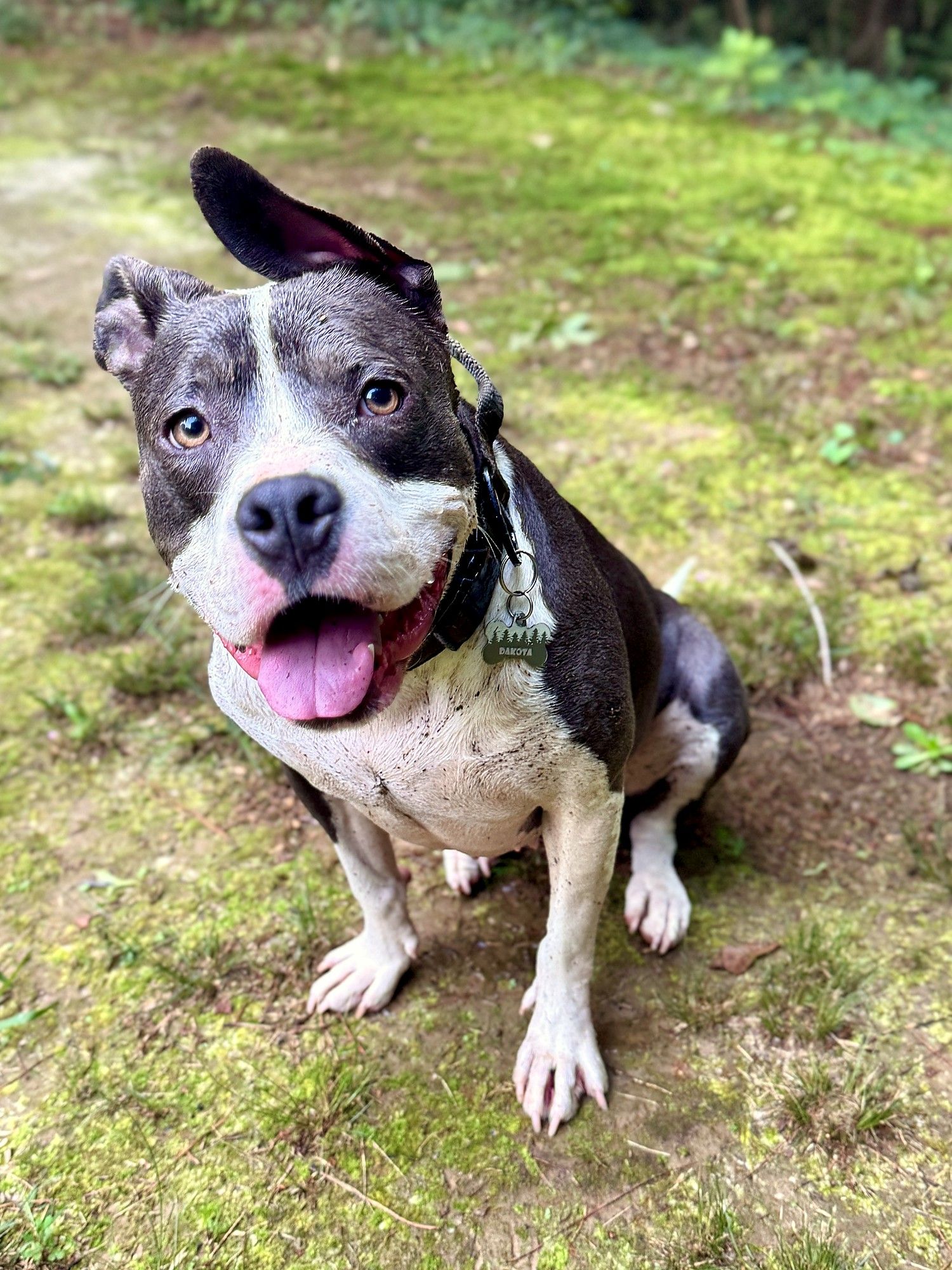
Reactive dog training
The walk doesn't have to be the worst part of your day.
Barking, lunging, pulling toward or away from other dogs, people, bikes, trucks. If you've started walking at odd hours to avoid it, this is the page for you. It's also most of what Phillip does.
What's actually happening
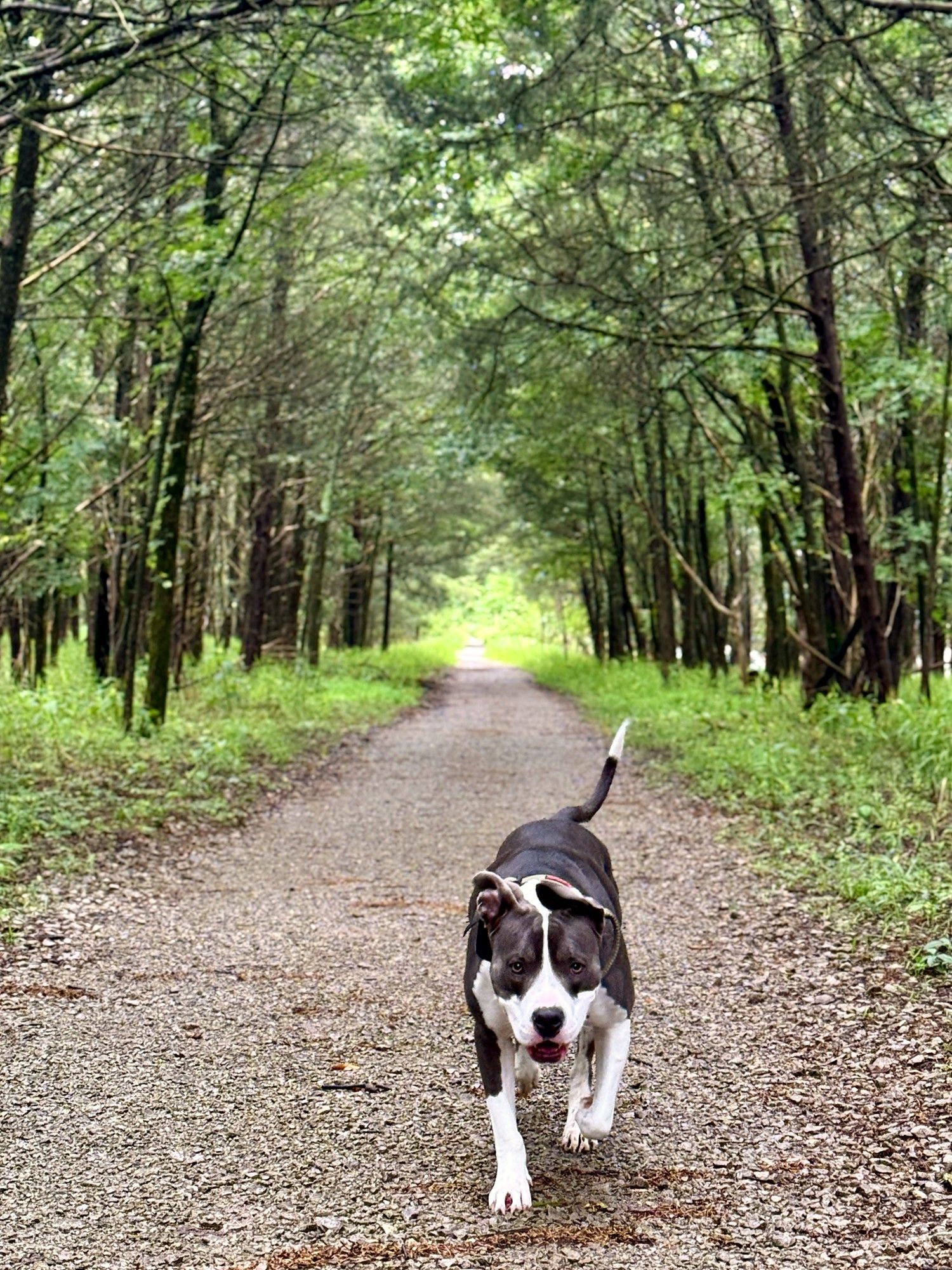
Your dog isn't being dominant. It's over its head.
A reactive dog has learned that the thing coming toward it is a problem, and that the leash means it can't leave. So it does the only thing left: make a lot of noise and hope the thing goes away. It usually does (the other dog walks on), which teaches your dog the noise worked.
With a 15-pound dog that's embarrassing. With a 70-pound pit bull or shepherd it's a shoulder injury, a dropped leash, or a neighbor who calls someone. The stakes are higher, so the plan has to be better. It is not a reason to give up on the dog.
The plan
How reactive dog training works here.
Five parts, in this order. Skipping the first one is the most common mistake owners and trainers make.
- 1
Rule out the body.
On the first call and in the assessment
Sudden reactivity in an adult dog, or reactivity plus a change in sleep, appetite or tolerance to touch, gets a vet question before a training answer. Pain, thyroid and gut problems can look exactly like a behavior problem.
- 2
Find the distance where your dog can think.
The threshold
Every reactive dog has a distance at which it notices the trigger and can still take food, look at you and walk on. Phillip finds yours, in your neighborhood, with real dogs and real people. That distance is where training starts. Closer than that is just practicing the explosion.
- 3
Change what the trigger predicts.
The core of the work
Other dog appears, good things happen, other dog leaves. Repeated at a distance the dog can handle, then a little closer, then a little longer. It's not complicated. It is precise, and it's easy to get the timing wrong on your own, which is why the first sessions are coached.
- 4
Fix the walk itself.
Equipment, route, timing
A front-clip harness or a well-fitted collar, a leash length that gives you information, routes with escape options, walking at the hours that match where your dog is right now. Management isn't giving up; it's what makes the training possible.
- 5
Take it to the real world.
Later sessions and Community Outings
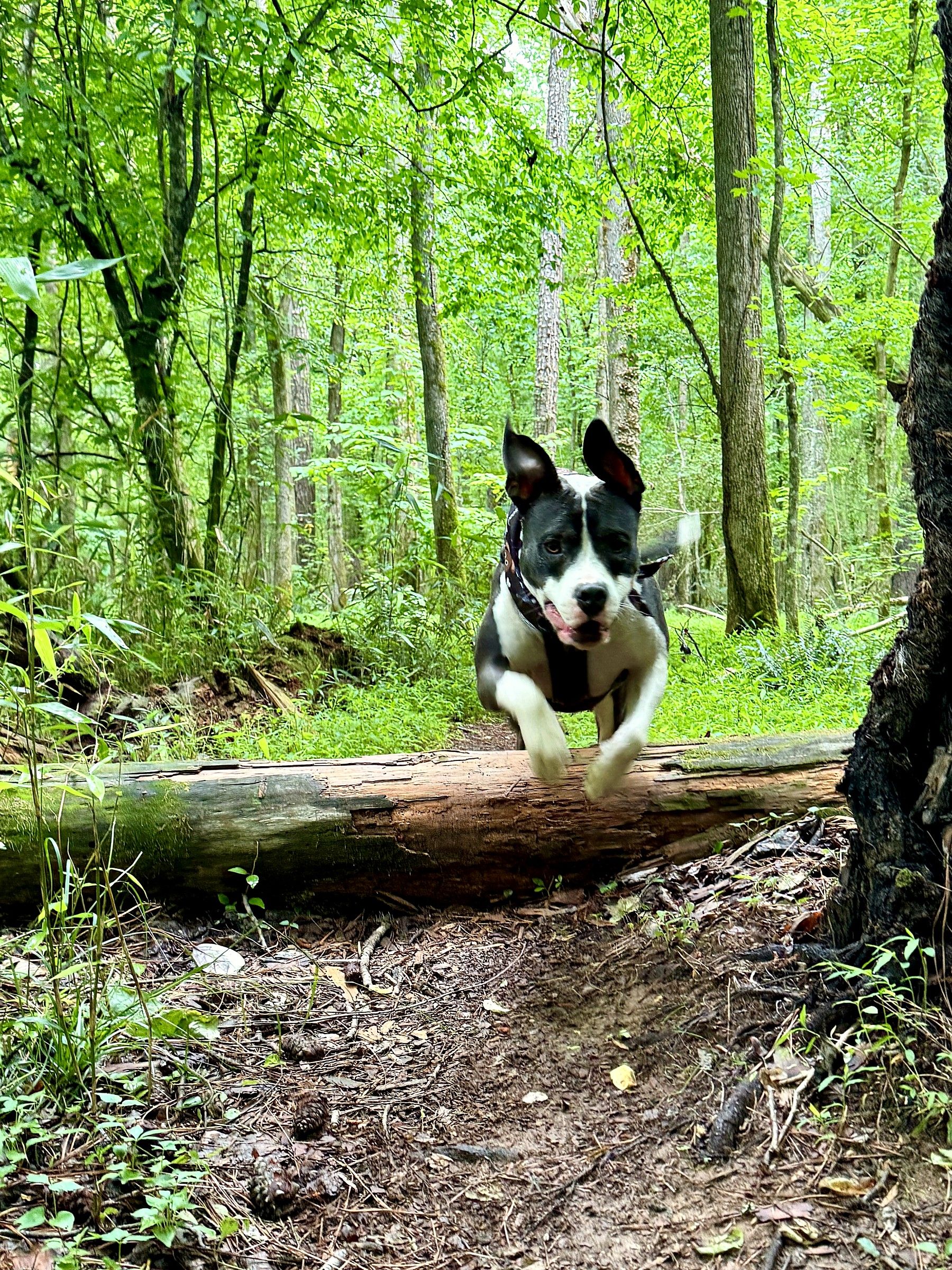
Trailheads, parking lots with a view, patios with a down-stay under the table. The goal is a dog you can take places, and that has to be practiced in places.
What you'll notice first
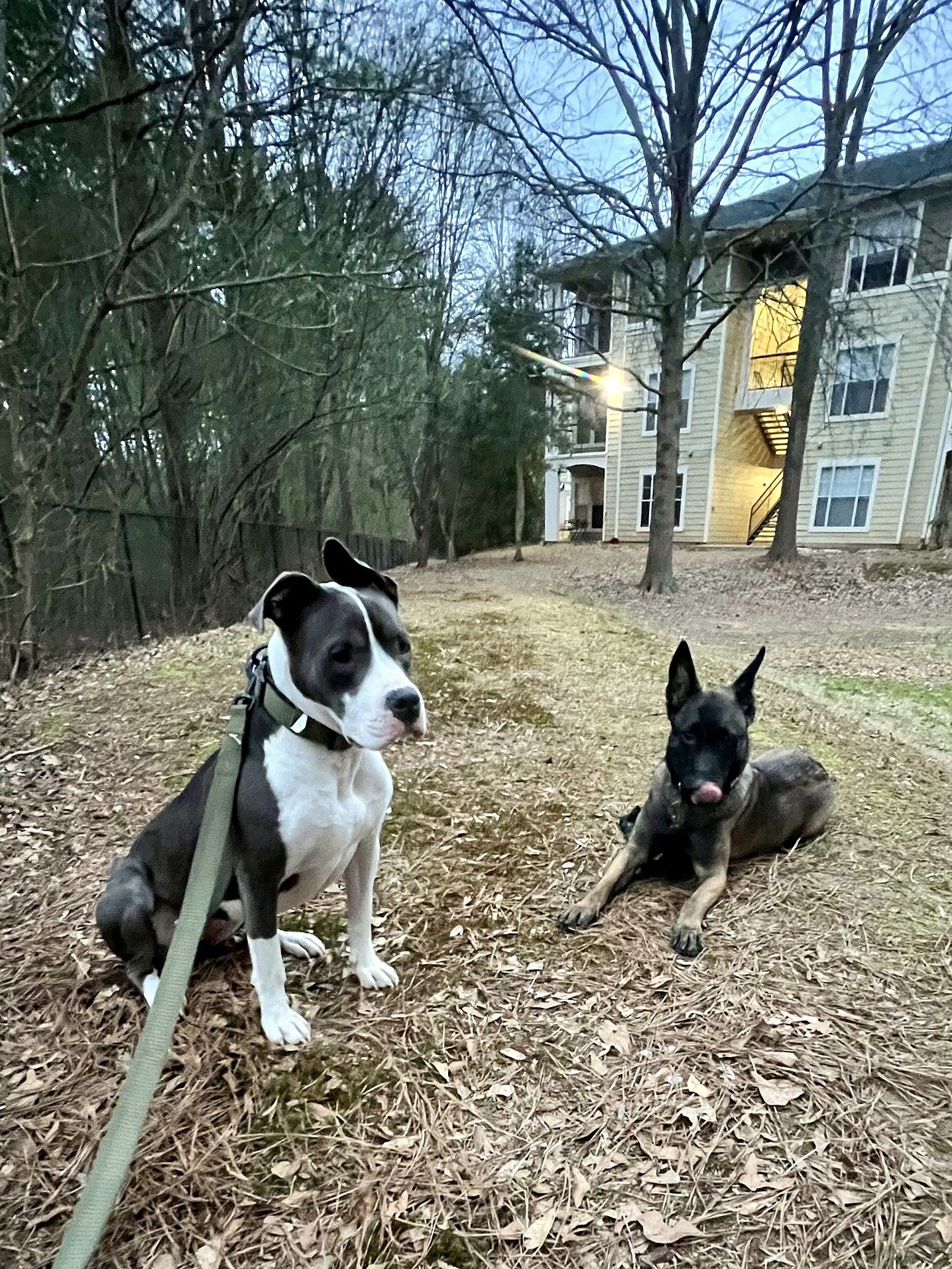
A dog that looks at the trigger, then looks at you.
That glance back is the whole job in miniature. It means the dog has noticed the thing, stayed under threshold, and remembered you exist. Everything after that (closer, longer, busier) is built on it.
- Walks with a plan and an exit, not a prayer.
- A leash you can hold with one hand.
- Knowing your dog's warning signs before the bark.
- Eventually, a patio table with your dog asleep under it.
Straight answers
Questions about reactive dogs
Is my dog aggressive or reactive?
Reactivity is an over-the-top response to something: barking, lunging, spinning, screaming on the leash. Most of it is fear or frustration, and most reactive dogs have no intention of hurting anyone. Aggression is behavior meant to make something go away, sometimes with contact. The two overlap, and a big reactive dog can hurt someone by accident. Phillip will tell you honestly which he thinks you're dealing with after the assessment.
Do you take dogs with a bite history?
Tell Phillip on the first call, with details: who, where, what happened before, how much damage. The intake form asks the same question. He'll tell you straight whether it's a case he takes on, whether it needs a vet or a veterinary behaviourist involved, and what safety measures he'd want in place first.
Will you use a prong or shock collar on my dog?
Phillip uses fear-free, reward-based training tailored to the dog. On the call he'll walk you through exactly what equipment he'd recommend for your dog and why, before he ever comes to the house. Nothing goes on your dog without you understanding it.
How long does it take?
Longer than anyone wants and shorter than most people fear. The first noticeable change (a dog that can see a trigger at a distance and come back to you) often shows up within the first few sessions if the homework is happening. Being able to pass another dog on a sidewalk is a longer road, and some dogs will always need distance. Phillip won't promise a timeline he can't see yet.
Why don't you do this in a class or a facility?
Because your dog isn't reactive in a training hall; it's reactive on Oak Street at 6:15pm. A class puts a reactive dog in a room full of triggers with no room to retreat. Training where the problem happens, at the distance the dog can handle, is slower to set up and works.
Reactive dog training in
- Mooresville, NC
- Statesville, NC
- Davidson, NC
- Cornelius, NC
- Huntersville, NC
- and the roads between them
Next step
Tell Phillip what your dog does. Fifteen minutes, free.
He'll ask about the trigger, the distance, the vet and the leash. Then he'll tell you whether he thinks he can help and what the first visit would look like.
Adopted in the last 6 months? Your assessment visit is free. How it works.