reactivity · large breeds · leash walking
Leash reactivity in big dogs: what is actually happening
Most leash reactivity is fear or frustration, not aggression. Why a 70-lb dog makes it a different problem, what threshold means, and what a session looks like.
By Phillip Greene ·
What a reaction actually is
Picture it. You are walking your dog down a quiet street in Cornelius, and another dog appears at the end of the block. Your dog stiffens. Then the noise starts: barking, lunging, spinning at the end of the leash, and a sound that makes the neighbor take her kid inside.
People call that aggression. Most of the time it is not.
Leash reactivity is a dog going over an emotional threshold and acting out. Underneath is usually one of two things. Fear: the dog wants the other dog to go away, and barking makes that happen, so barking gets reinforced every single time. Or frustration: the dog wants to get to the other dog, cannot because of the leash, and the frustration comes out sideways as noise and lunging.
Both look the same from thirty feet. They feel different on your arm, and they get worked differently.
The leash matters here. Off leash, most of these dogs would either approach politely or move away. On leash, they cannot do either, so they do the third thing. I am not suggesting you drop the leash. I am saying that reactivity is a behavior built in the gap between what the dog wants to do and what the leash lets him do.
Actual aggression, the dog who means to make contact and follow through, exists and is a different conversation. I see far less of it than the labels suggest.
Why seventy pounds changes the problem
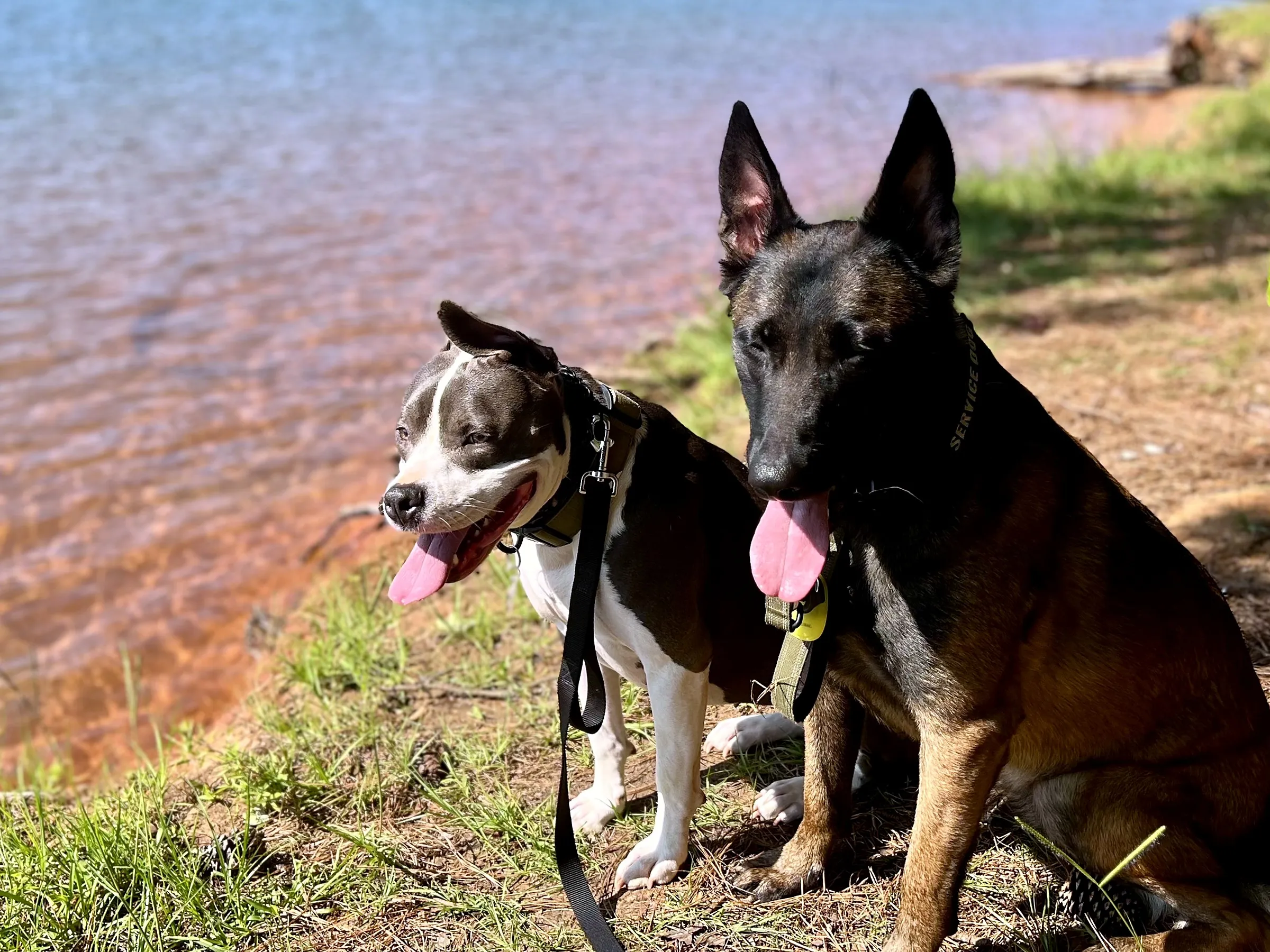
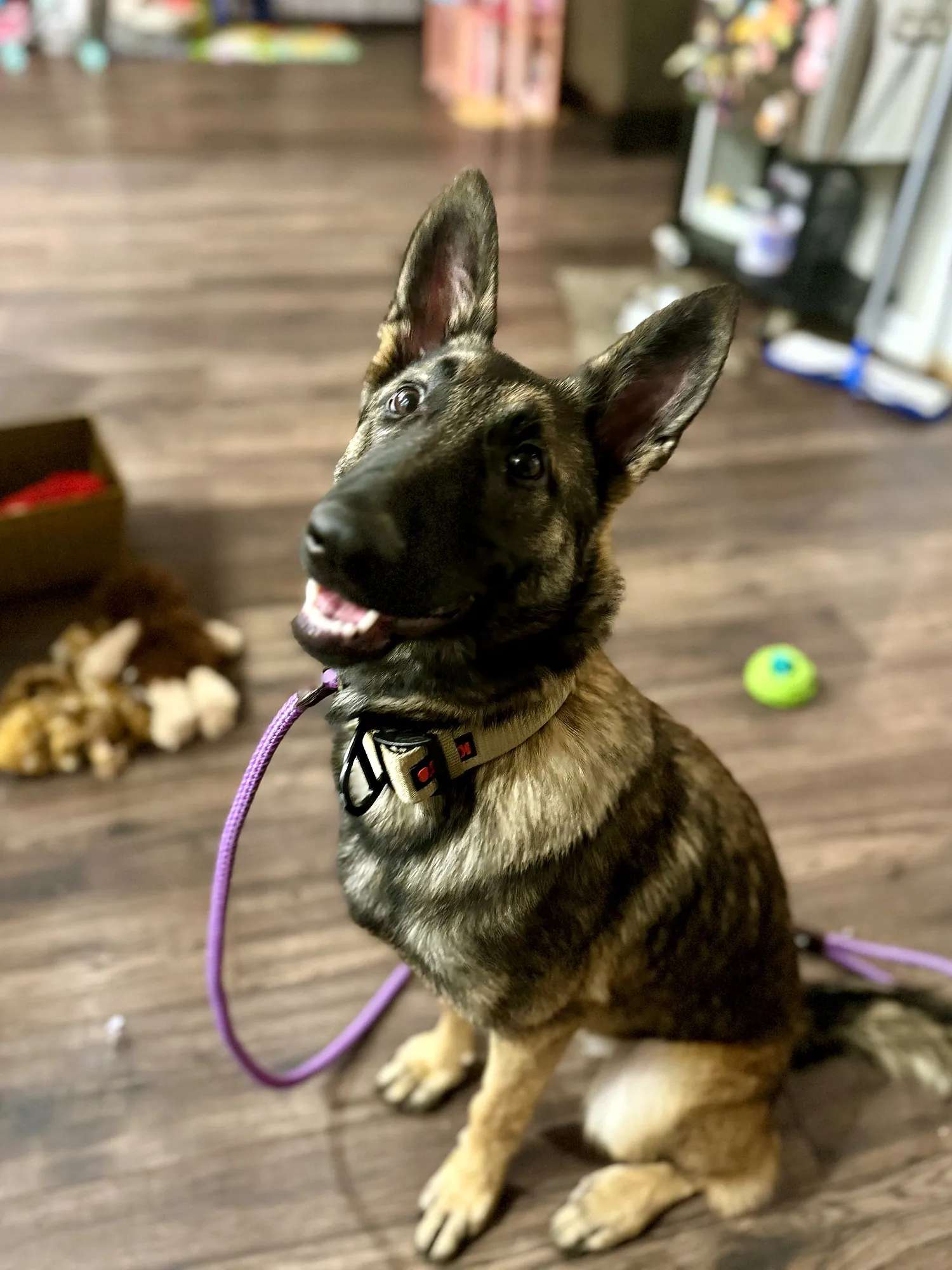
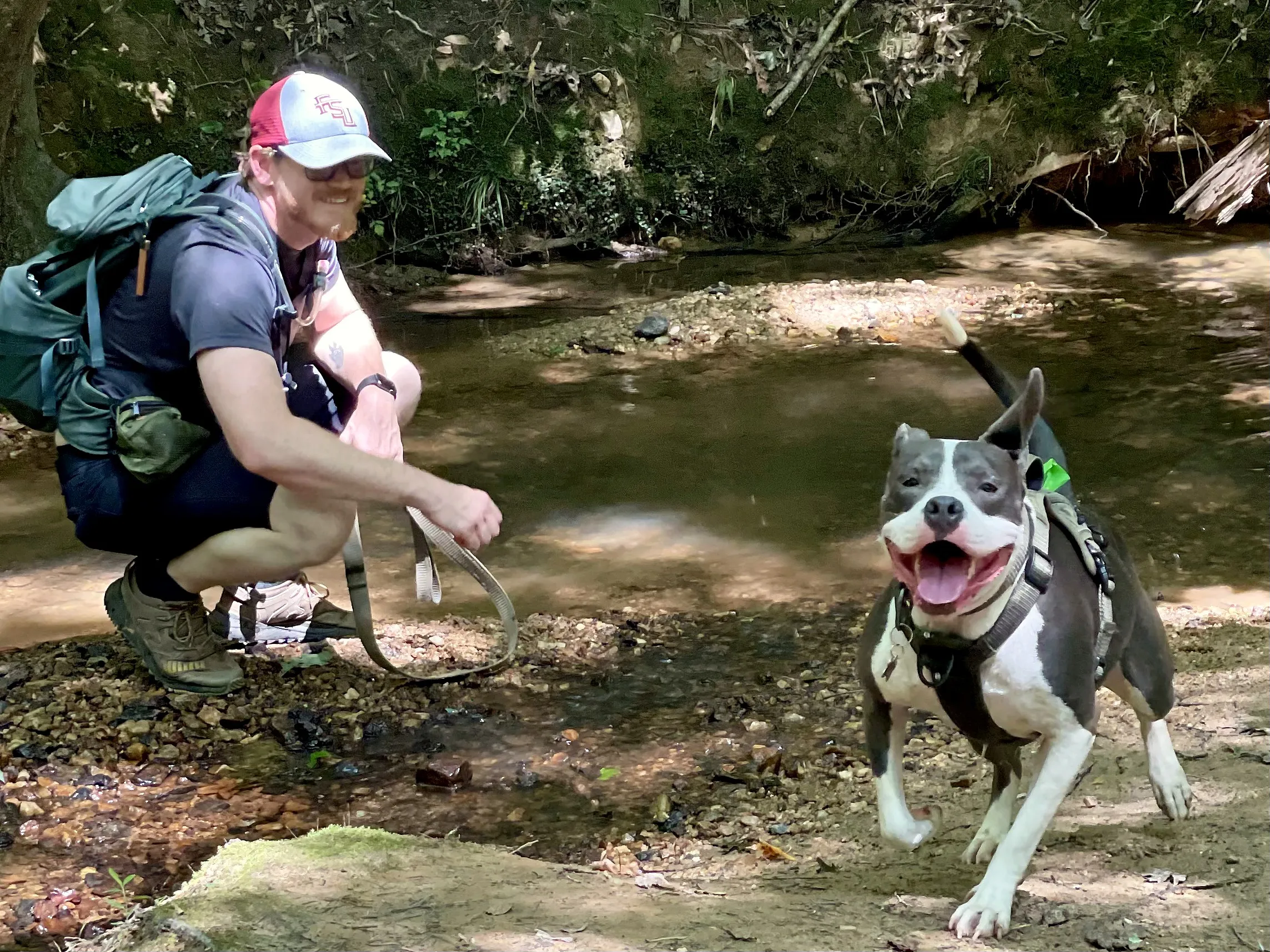
I train a lot of pit bulls, Malinois, and shepherds. Some people find that odd. Here is why I lean into it.
A fifteen pound dog who loses his mind at another dog is annoying. A seventy pound dog who loses his mind at another dog can put you on the pavement. The feeling of a big dog hitting the end of a six foot leash is a jerk that runs from the wrist to the shoulder and shifts your whole weight forward. If you are holding a coffee, the coffee is gone.
So with big dogs, the same behavior carries different consequences.
The owner gets scared. A scared owner tightens the leash before anything has happened, and the dog learns that other dogs mean the leash goes tight, which is a cue that something bad is coming. The owner is now part of the trigger.
Walks stop. The dog gets walked at 5am or not at all, which means less exercise, less exposure, and more energy stored up for the next reaction.
Equipment gets escalated. Every month there is a new collar or harness from the pet store, and none of them teach the dog anything, because equipment does not teach.
Everybody judges. The same barking from a beagle gets a laugh. From a pit bull it gets a phone call to the HOA.
None of that means the dog is worse. It means the dog is bigger. That is why I treat large breed work as its own thing. The training principles are the same. The equipment and the owner’s confidence are not.
Distance and thresholds
The most useful idea in reactivity work is threshold. Every dog has a distance at which he notices the other dog and can still think. Closer than that, thinking stops and barking starts.
Your job for the first while is to find that distance and stay on the right side of it. For some dogs it is forty feet. For some it is across a football field. A dog who reacts to a dog on the other side of the road has a threshold that is not this road.
This is where people go wrong on their own. They try to push through. Get closer, hold tighter, say “leave it” louder. Every time the dog goes over threshold, the pattern gets a little deeper.
Under threshold, the dog can see the other dog, notice it, and have something good happen. Above threshold, the dog cannot learn anything. He is busy.
The first three things I change on a walk
Before we teach a single new behavior, I change the walk itself.
First, the route. Stop walking the gauntlet. If your street at 6pm is a parade of dogs, we walk somewhere else, or earlier, or later. Wide sightlines beat blind corners. A cul-de-sac with a view is better than a greenway with a hedge.
Second, the equipment. I want a well fitted harness or a flat collar, a six foot leash (not a retractable), and a treat pouch on the owner. The retractable goes in a drawer. I am not going to make sweeping claims about tools here. What I will say is that with a big dog, I want something that keeps you upright and does not hurt him when he hits the end of it.
Third, the owner’s hands. Most people walk a reactive dog with the leash wrapped twice around a fist and the arm locked. That transmits tension straight down the line. I teach a loose leash held with a relaxed wrist, and a way to shorten it in a hurry if we need to. The difference in the dog is immediate.
Then comes the treat pouch, and I am specific about it. Mine has something boring (kibble), something good (freeze dried liver, cut small), and something outrageous (string cheese or a bit of hot dog) for the moments that matter. If the dog will not take food, we are too close. That is information, not a failure.
What a session actually looks like
A private lesson is 75 minutes and it happens where the problem happens. I do not have a training hall. I have your street.
Minute one to ten: I watch you walk your dog. Just walk. I am looking at the leash, your shoulders, where the dog’s head is, and what he does when he notices something.
Minute ten to twenty: we adjust equipment and handling. This is the part where I fix your hands.
Then the real work. We find a spot with a sightline and wait for a dog to appear, or I bring one of my own as a stooge at a controlled distance. The dog sees the trigger, I mark it, food happens. Look at the dog, good things happen. Over and over. When your dog can look at the trigger and then look back at you on his own, we have something.
Along the way I teach a U-turn, a “let’s go” that means we leave now, and a pattern for passing a dog on a sidewalk with no room. Emergency skills first. Fancy stuff later.
The last ten minutes is homework. Two short walks a day, at threshold distance, with the pouch. Not one long walk where everything goes wrong.
Why I train in your neighborhood
A training hall is a controlled environment. Your dog does not live there.
Dogs do not generalize well. A dog who is calm around other dogs in a room with rubber mats is not necessarily calm on the corner of your street. I would rather start where the behavior lives and work outward. Your driveway, then the block, then a trail at Lake Norman State Park on a weekday morning when it is quiet.
It also means I see the real stuff. The neighbor’s dog behind the fence. The fact that your dog is fine until a cyclist goes by. I cannot see any of that in a hall.
What to expect, honestly
Reactivity does not get “cured” in a session. It gets managed better on day one, and it gets better over weeks of walks where nothing bad happens. Some dogs go from barking at every dog to walking past most of them. Some dogs stay dogs who need space, and their owners learn to give it to them without drama. Both are wins.
If your dog is big and the walks have become something you dread, start with the free call at the contact page. Tell me what he does and where. I will tell you whether I think I can help, and what it would cost, before anybody books anything.