lake norman · outings · summer
Dog-friendly Lake Norman: how to actually enjoy it
Taking a big dog to the lake, the trails and the patios around Lake Norman without a scene. Heat, pavement, life vests, leash rules and the patio down-stay.
By Phillip Greene ·
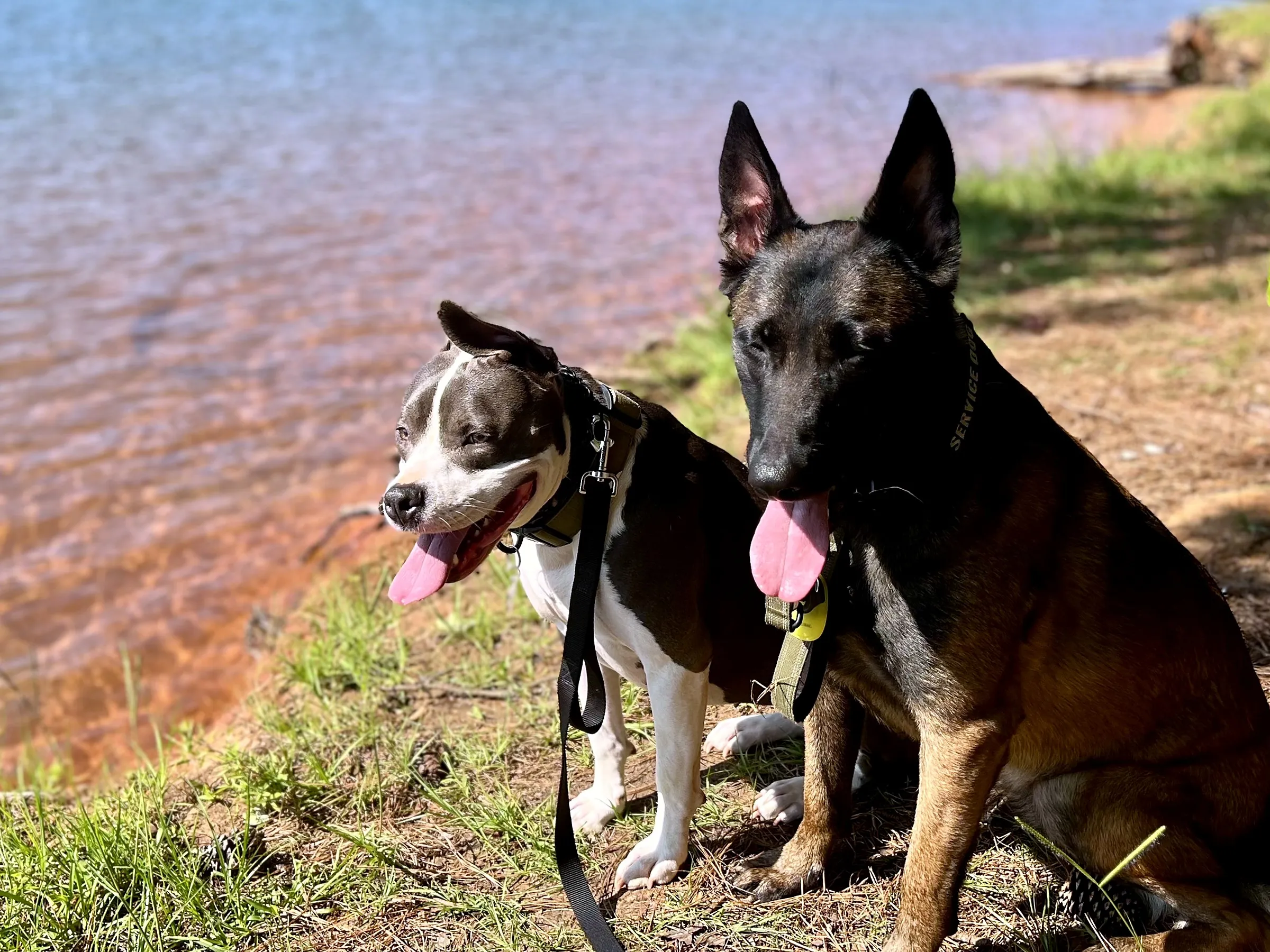
The lake is great. The scene is optional.
If you live around Lake Norman and own a big dog, you have probably had the fantasy. Paddleboard with the dog on the front. Patio in Davidson with the dog asleep under the table. A hike at Lake Norman State Park with the dog trotting ahead like he is in a nature documentary. The dog asleep in the back of the car on the way home.
You have probably also had the other version. The dog who lost his mind at a golden retriever on the greenway. The patio where you spent the whole lunch holding the leash under the table with one hand and apologizing with the other.
The difference between the two is mostly preparation, and a bit of honesty about which dog you have today. Here is how I think about it.
Heat and pavement first
This part is not exciting, and it is the part that sends dogs to the emergency vet.
North Carolina summers are hot and wet. Big dogs and dark coated dogs, and anything with a short nose, overheat faster than you think, and an excited dog does not notice until he is in trouble. If it is over 85 and humid, the lake trip happens at 7am or it happens another day. Heat stroke in dogs is real and it can kill. Watch for heavy panting that does not settle, a bright red tongue, stumbling, or a dog who suddenly wants to lie down in the shade and will not get up. If you see that, cool him with water, get him into air conditioning, and call your vet.
Pavement. Put the back of your hand on the asphalt for seven seconds. If you cannot hold it there, your dog cannot walk on it. Parking lots at the lake in July will burn pads. Go early or stick to grass. Booties work too, if your dog will tolerate them, and most will eventually if you make it a game at home first.
Carry water. Not “there is water at the lake.” Lake water in late summer can carry algae that makes dogs sick. Bring your own and a collapsible bowl.
Water safety and the life vest question
Yes, put a life vest on your dog. Even the ones who can swim.
Pit bulls, in particular, are dense. They are muscle with very little float, and a lot of them swim like a brick with legs. The Malinois and the shepherds are usually better swimmers but they tire, and a tired dog forty feet from shore is a dog you have to go in after. A vest with a handle on the back means you can haul him onto a dock or a kayak without doing your back in.
Before the vest goes on at the lake, it goes on in the living room, with treats, for a few days. Then in the yard. Then the lake. Same rule as everything else with a big dog: nothing new in the exciting place.
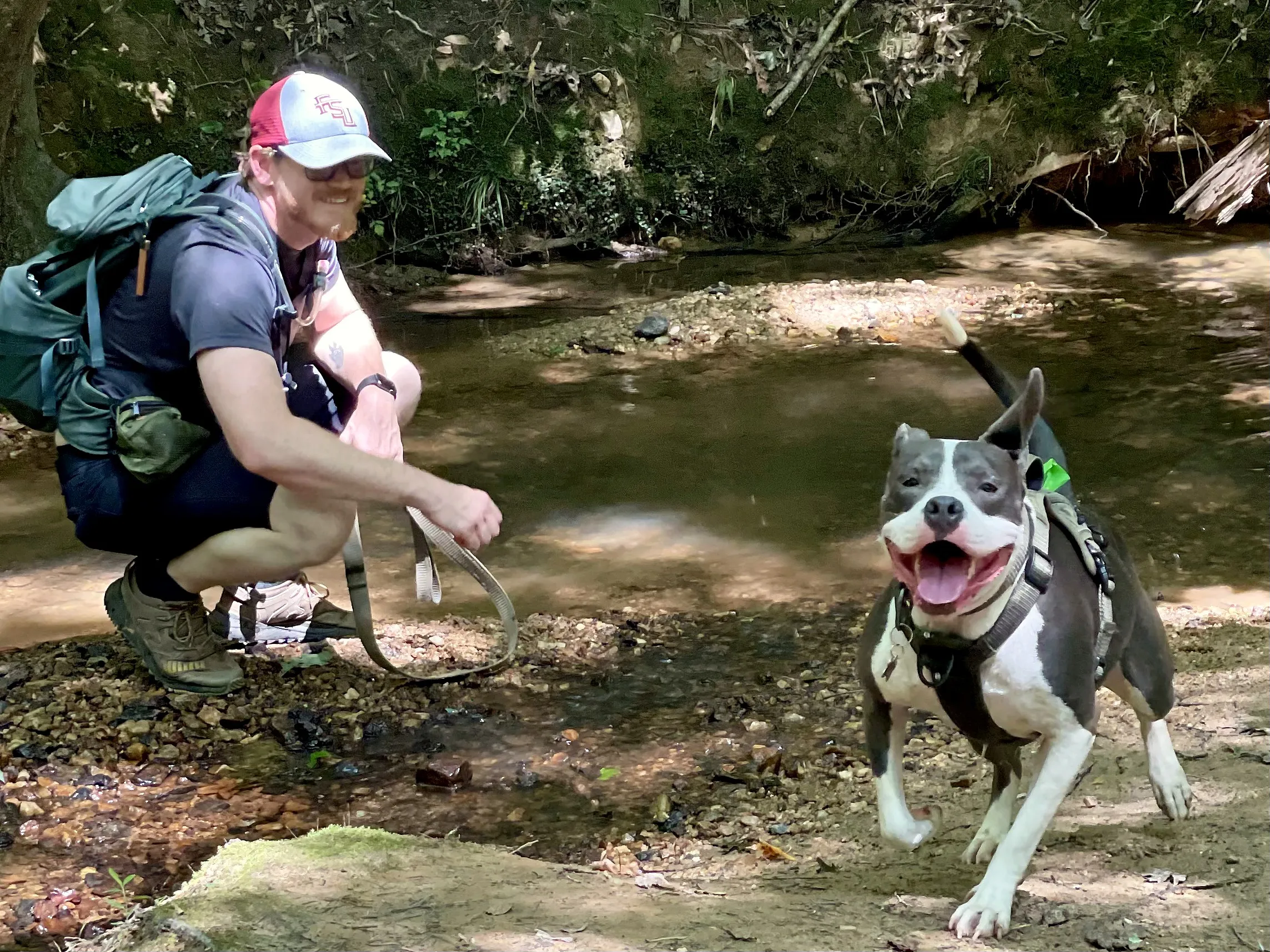
A few other water things I would want a client to know. Check the shoreline for fishing line and hooks. Keep the dog out of the water when the boat launch is busy. Rinse him afterward, because lake water left in a coat leads to itchy skin and ear trouble, and ear infections make dogs grumpy. And if your dog has never been in deep water, go in with him the first time. Some dogs panic when they lose the bottom.
Trails and greenways
The greenways and the state park trails are where big dogs are at their best, and they are also where the leash rules matter most. Some towns around the lake require a leash everywhere. Some parks have a maximum leash length. A few places have specific rules for swim areas, and they change. I am not going to list them here because they would be wrong by the time you read this. Check the town or park website before you go, and assume “on leash” if you are not sure.
On a trail, a six foot leash and a harness. Not a retractable. A retractable on a narrow trail is how your dog ends up wrapped around a cyclist.
Give other people room. Step off the trail with your dog on the far side of you when someone passes. Ask him for a sit if he has one. If he does not have one on a trail yet, just hold him on the far side and let them by. Most people do not mind a big dog. They mind a big dog that lunges toward their kid, even in play.
And know your dog’s limit for the day. A dog who is fine for the first mile and reactive by mile three is a dog who is tired and over threshold. Turn around before that, and end on a good walk instead of a bad one.
Patio etiquette, which is mostly a down-stay
The patio dream is real and it is completely trainable. Here is what it actually takes.
The skill is a down-stay under or beside the table, for the length of a meal, with food and strangers and other dogs going past. That is a big ask. It gets built at home first: a mat, a down, thirty seconds, two minutes, ten minutes, through a whole dinner. Then on your own porch. Then a quiet bench in a park. Then the patio, at 2pm on a Tuesday when it is dead, for one drink. Then lunch. Then a Friday.
Skip a step and you get the version where you hold the leash under the table for ninety minutes.
Some practical things. Sit at an edge table, so the dog has a wall behind him and does not get walked past on both sides. Bring a mat so he knows where his spot is. Bring a chew that takes a while. Do not let strangers feed him from the table. Do not let him say hello to every dog that walks past. A patio is for lying down, not for socializing.
And if he is having a bad day, leave. Ask for the check, pay, go. There is no prize for staying. The next visit will be better because this one did not end in a scene.
What Community Outings practice
This is exactly what the free Community Outings are for. A few times a season I pick a place, a trail or a patio or a park, and clients bring their dogs to practice being normal in public with somebody there to help.
What we practice: passing other dogs on a trail with space. Down-stays with distractions. Loading in and out of cars calmly in a busy lot. Greeting people politely, or not greeting them at all, which is often the better skill. Walking past a patio full of food. Lying on a mat while everybody else’s dog walks by.
Nobody is drilling anything. It is a walk with people who understand that a big dog needs distance and a bit of patience, and who will not judge you when yours has a moment. The dogs learn that the world is not that interesting. The owners learn that they can do this without me standing next to them.
Outings are free for current and past clients. If you are not a client yet, the first step is the free phone consult on the contact page.
A short list for the car
Water and a bowl. A six foot leash and a spare. A mat. A chew. A towel. The life vest. Treats that are worth more than a squirrel. Your dog’s vaccination record on your phone in case a park asks. And a plan to leave early if the day is not going well.
The lake is going to be there next weekend too. The goal is a dog who gets invited back.